Operational Workflows
Patients, consultations, records, prescriptions, pharmacy, billing and analytics.
KLINIK 2.0 is a healthcare ERP case study showing how patient management, consultations, medical records, prescriptions, pharmacy inventory, billing and analytics can be connected into one operational backbone.
Before writing code, KLINIK starts with healthcare workflow analysis: understanding patient journeys, clinical operations, administrative bottlenecks and the need for secure, traceable information.
From business requirements to architecture, backend APIs and user experience — KLINIK demonstrates the complete journey from idea to enterprise-grade software.
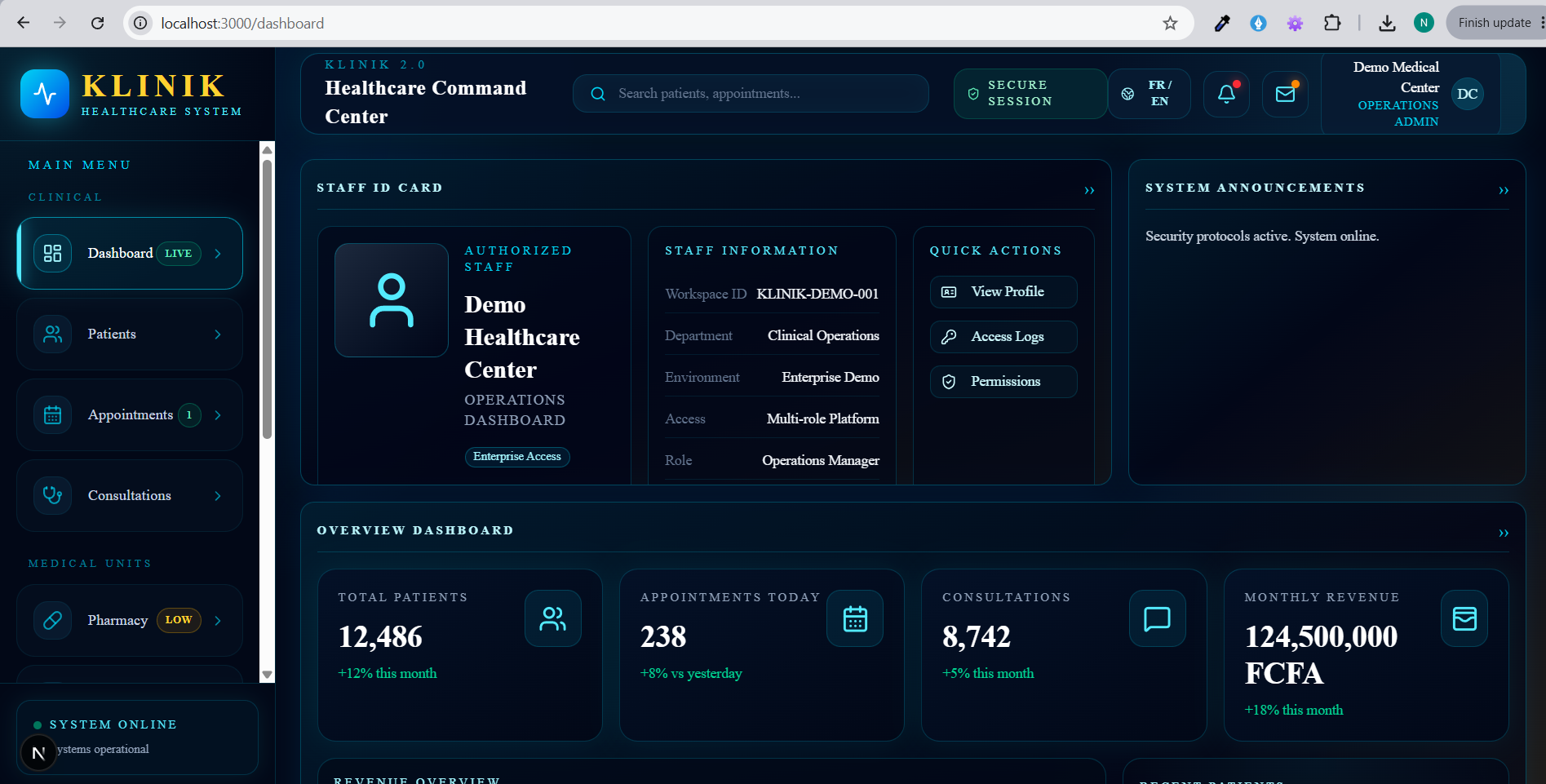
KLINIK 2.0 demonstrates business analysis, healthcare workflow modeling, backend architecture, data modeling, security and modern product delivery.
Patients, consultations, records, prescriptions, pharmacy, billing and analytics.
Frontend, secure API and database-backed business logic.
Designed for clinic-level isolation and scalable healthcare operations.
Prepared for analytics, workflow assistance and intelligent automation.
Patient records live in one place. Appointments are managed elsewhere. Billing, prescriptions, pharmacy and reporting are disconnected. KLINIK brings these workflows into one operational backbone.
Manual records slow access and increase duplication.
Operational data becomes hard to maintain, control and audit.
Teams lack one reliable operational view.
Billing, pharmacy and inventory become harder to reconcile.
Managers lack timely insight into clinic performance.
Every major clinic workflow can be connected: patients, appointments, practitioners, medical records, prescriptions, billing, pharmacy, inventory, audit logs and analytics.
KLINIK 2.0 is structured as a modular healthcare ERP where each capability supports a real operational workflow.
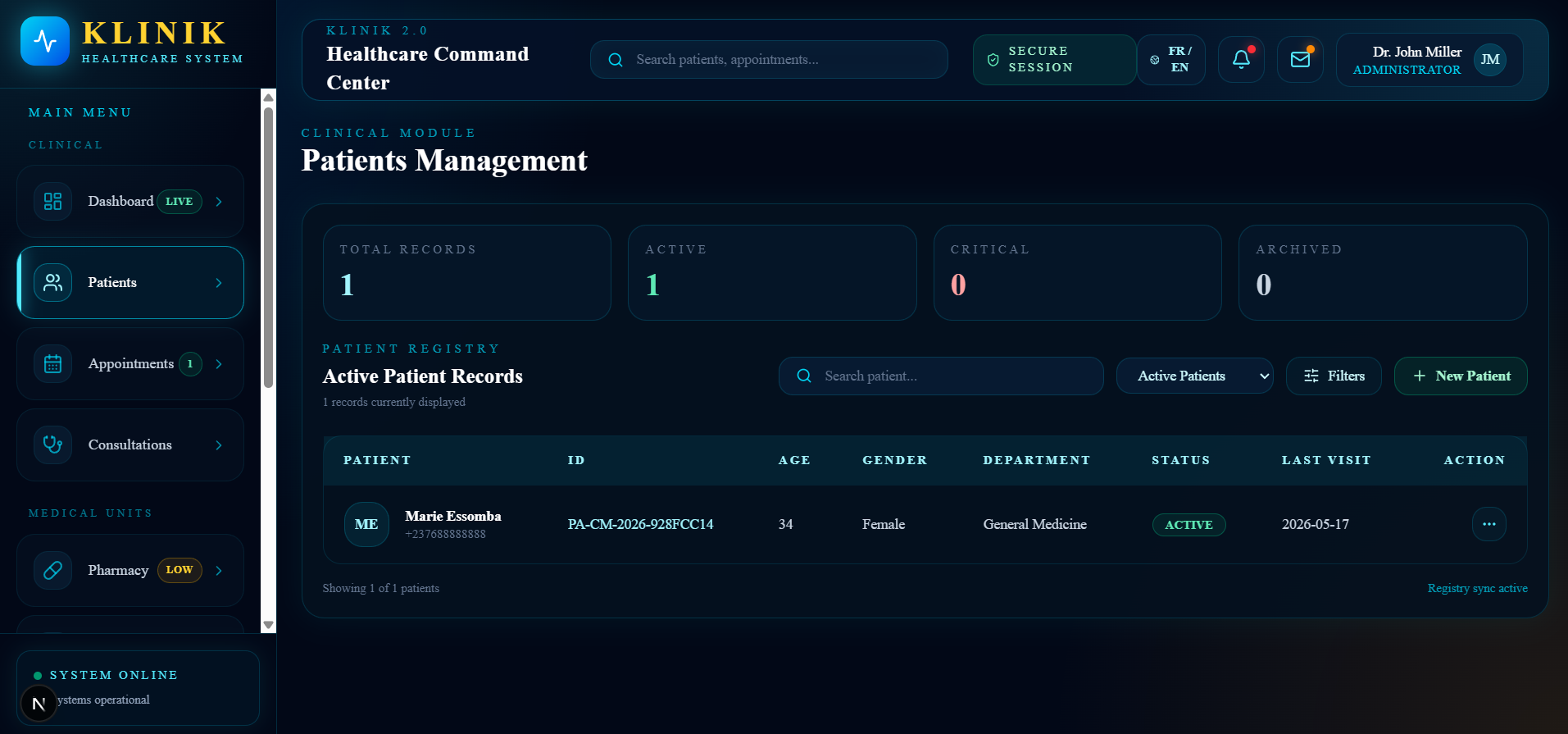
Create, manage, retrieve, archive and track patients inside a tenant-aware clinical environment.
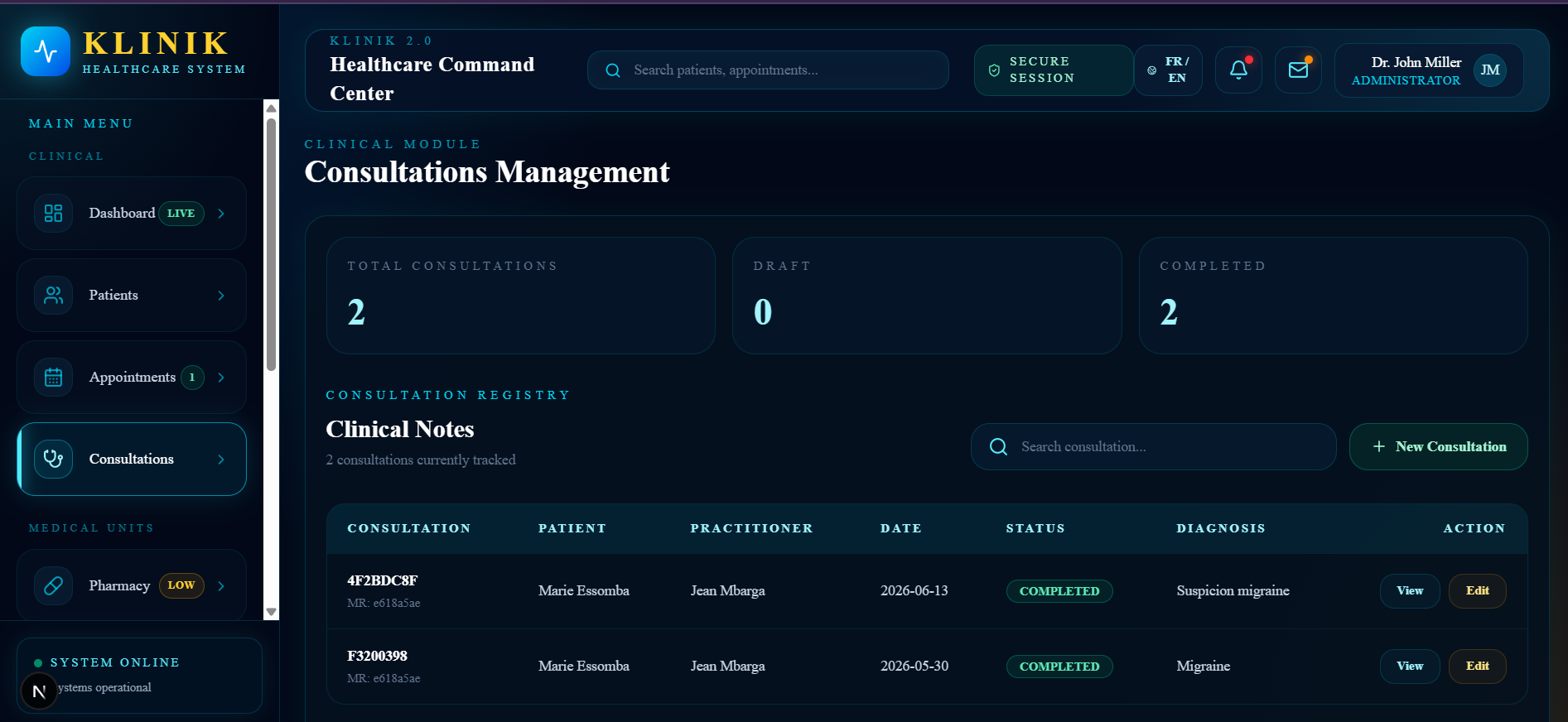
Track consultations, practitioners, dates, status, diagnosis and clinical actions inside one structured workflow.
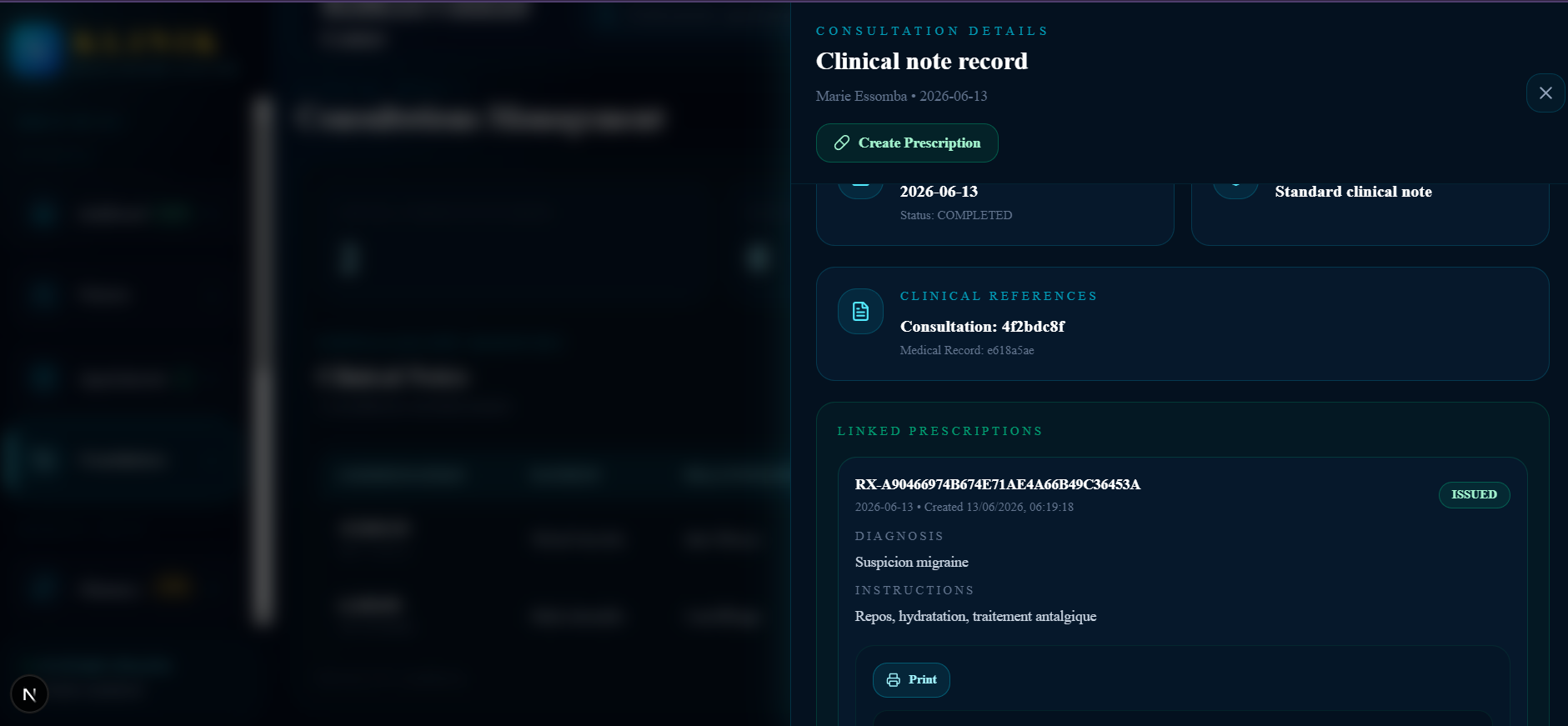
Connect clinical notes, diagnosis, instructions and prescriptions inside the same patient care journey.
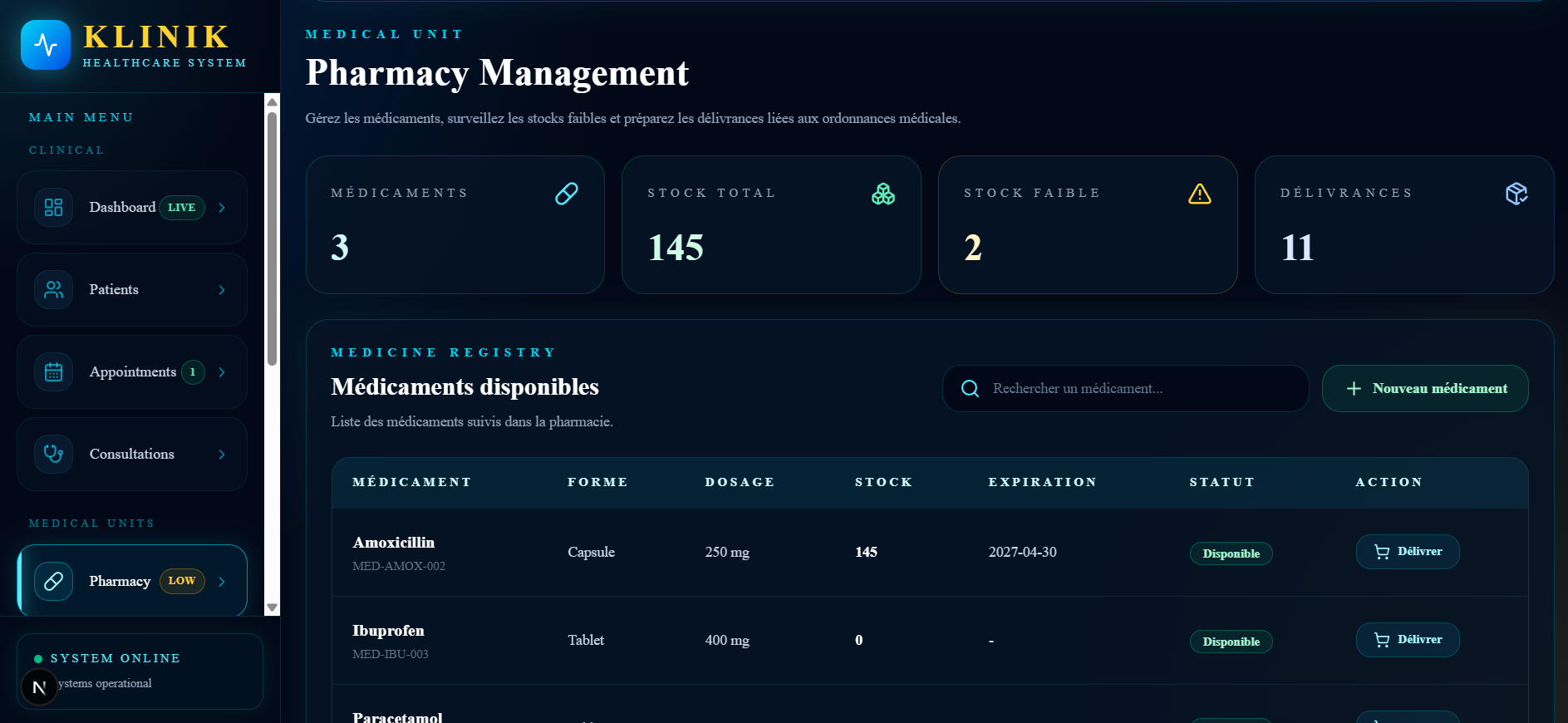
Track medicines, stock, low-stock alerts, expiration dates and medicine dispensation linked to clinical operations.
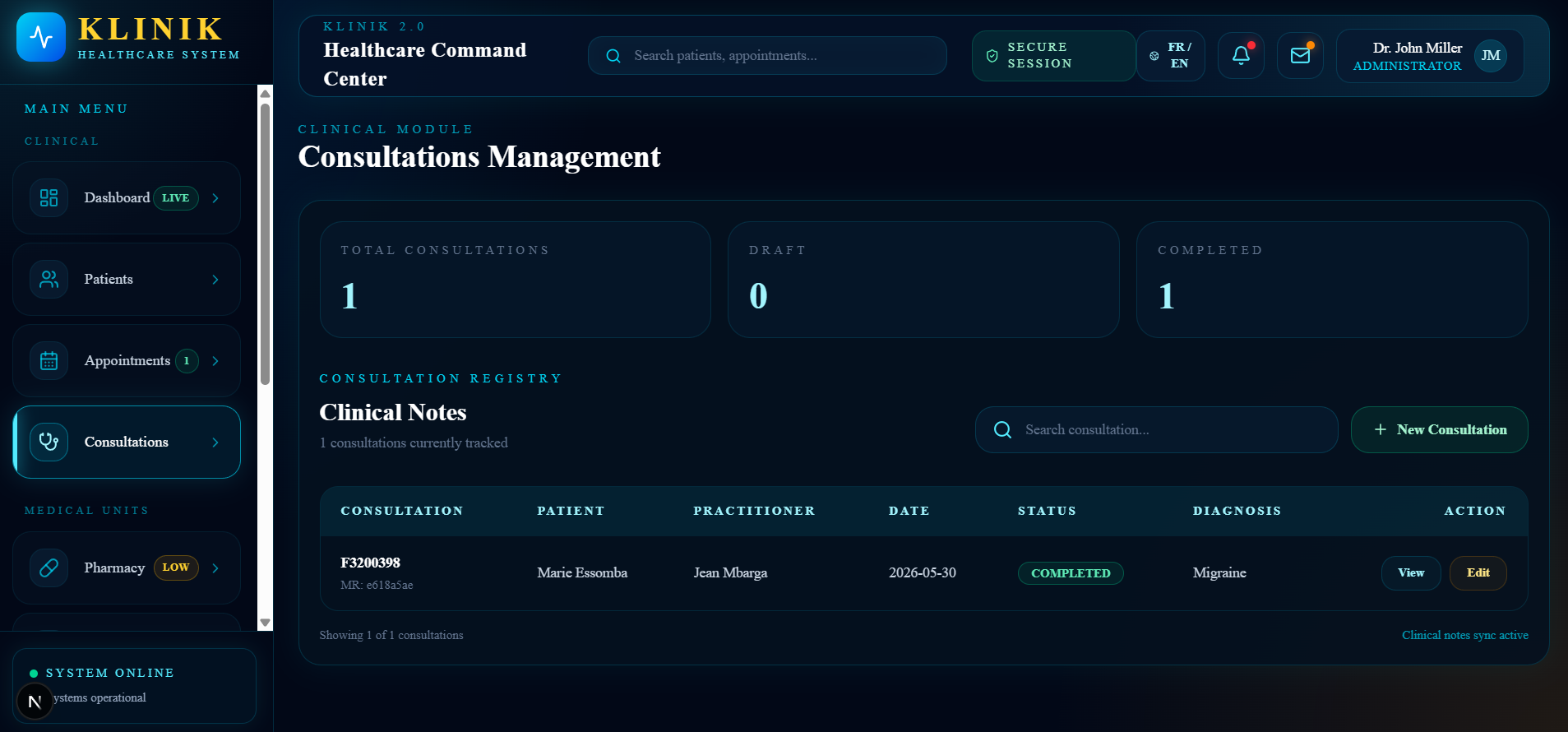
KLINIK shows how a clinical event becomes a traceable operational flow: note, diagnosis, prescription, print, pharmacy and follow-up.
KLINIK is designed as a bridge between operational reality and enterprise software delivery.
Understand patient journeys and clinic operations.
Turn real processes into clear workflows.
Define functional scope and requirements.
Design secure, scalable system foundations.
Deliver usable product modules.
Improve through testing and user feedback.
KLINIK 2.0 uses a modern full-stack architecture designed for maintainability, security, modularity and future cloud deployment.
Modern healthcare UI and responsive dashboards.
Java backend with DTO → Service → Controller flow.
Stateless authentication and protected APIs.
Tenant-aware operations with X-Tenant-ID.
Reliable relational database for operational workflows.
KLINIK is built with technologies that communicate seriousness to clients, recruiters and technical stakeholders.
KLINIK is part of a broader OSENIX portfolio vision: modernize operations through structured digital systems, intelligent workflows and scalable technology.
Help healthcare organizations spend less time managing disconnected processes and more time delivering care.
The ERP foundation opens the door to a larger healthcare technology ecosystem.
From healthcare platforms to custom enterprise systems, OSENIX helps transform complexity into clarity and clarity into working software.